This post was originally posted by Roger via his LinkedIn account:
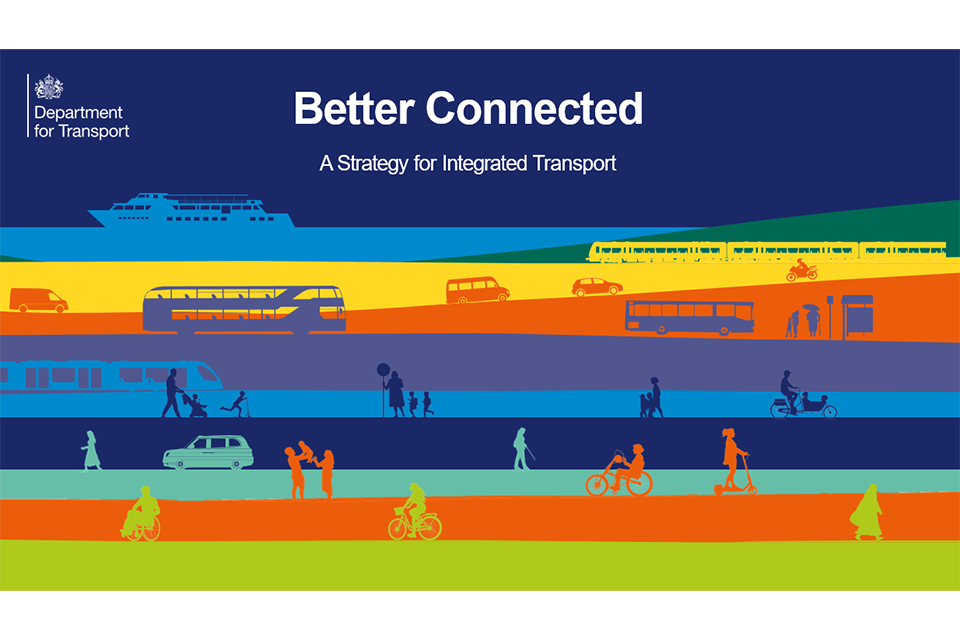
Last week (on 2 April 2026), the Department for Transport (DfT), United Kingdom published its long-awaited ‘Better Connected’ transport strategy, formerly the Integrated National Transport Strategy https://lnkd.in/ePuqwyTu.
That same day, DfT also issued some even-longer-awaited guidance to English councils on producing Local Transport Plans https://lnkd.in/eW2_bV_Z, and its 3rd Roads Investment Strategy (RIS3) had come out just 7 days earlier https://lnkd.in/eyjZ7pHw.
To be fair, Better Connected contains several unflashy but sensible proposals, particularly on integrating transport and land-use. I will come back to these.
Yet my overriding feeling is how weak it is as a strategy. In fact, I’d say it isn’t a strategy at all. It contains no analysis of the nation’s transport problems, let alone any measurable commitments to tackle them – i.e. it lacks SMART objectives.
In particular, it fails to mention DfT’s prediction that motor traffic on our roads will grow by 10% by 2035 unless action is taken to prevent this – on top of the doubling we’ve already seen since 1980 and the 10-fold increase since 1950 https://lnkd.in/eBmrUKcf. Nor does it make any commitments to tackle the many associated problems.
Crucially, the climate crisis is hardly mentioned at all. There are two brief subsections on air pollution and noise. Yet the climate only merits one brief paragraph slipped in under the air pollution subheading – even though surface transport has been the UK economy’s highest-emitting sector since 2016, with emissions having actually increased since dipping during the pandemic https://lnkd.in/eqcZS5BD.
Even more frustratingly, DfT’s road traffic predictions HAD just been cited in RIS3, as justification for continuing to build new road capacity. The good news is that RIS3 has shifted the balance of spending markedly toward maintaining existing roads, instead of building new ones, see https://lnkd.in/eUFsQyAB. Yet DfT is still effectively engaged in ‘predict and provide’ – i.e. predicting future levels of motor traffic and providing the extra road space to cater for this – despite constantly denying this.
What’s sad is that, during DfT’s ideas-gathering roadshow events which shaped the strategy, the officials would clearly have wanted to write a much better strategy. I can only assume No. 10 over-ruled them, fearing that such a strategy would have attracted bad headlines from certain sections of the media, for daring to suggest that motor traffic growth needs to be reversed – even though that is clearly what the public wants https://lnkd.in/eT-WwuD5.
I will be more positive about some of the strategy’s individual proposals in two further blogs, as we need to make the most of the opportunities they offer. Yet ultimately, it seems DfT has failed to produce a proper strategy, for fear of a media backlash if they dared to say what needs saying about tackling the nation’s transport problems.